Posted On: February 3,2026
People are used to seeing a doctor at a set time, waiting for appointments, and sitting in line. Of course, this is tiring, especially when people come to the doctor feeling unwell. It’s also difficult for doctors to keep track of all their patients’ information, since people see different doctors and each has their own health information. It’s difficult to consolidate it all. Furthermore, people may not have time to see a doctor. And if a specialist doesn’t monitor their health promptly because of this, their condition may worsen. This is the reality we’ve become accustomed to. Couldn’t things be different? Yes, they can!
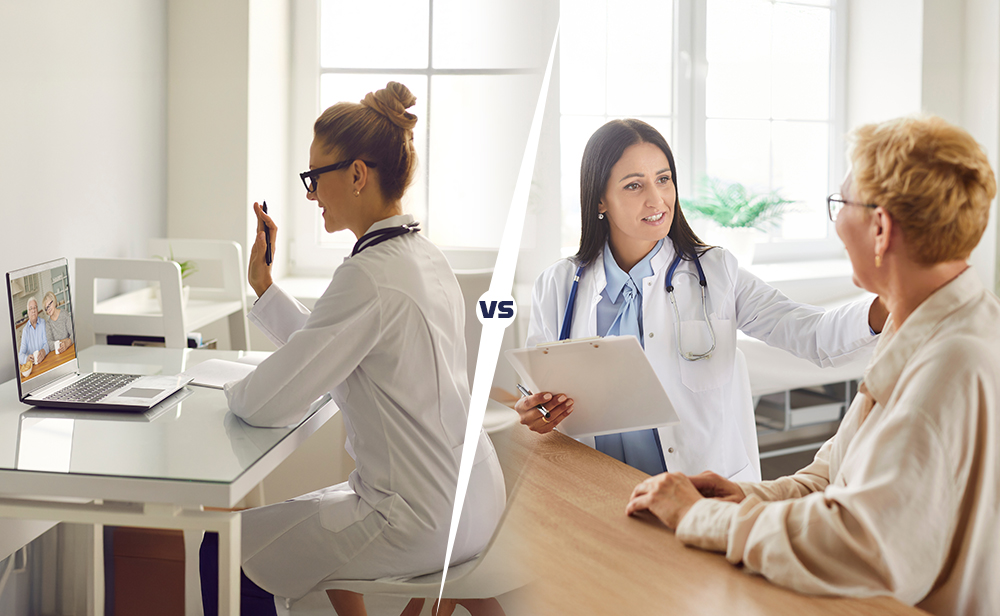
Even during COVID-19, when people’s movements were restricted, telemedicine gained particular popularity. You can contact a doctor at any time without waiting in line or wasting time and energy on travel. This unique approach has simply revolutionized our understanding of medicine. However, some are wary of these services. Some are perplexed: Is it really possible to have a high-quality visit online? Why change anything in traditional medical care, which has worked for centuries? Are older adults really comfortable with new technologies? Telehealth vs. in-person visits? Let’s discuss.
Telehealth Services Benefits
Telemedicine and traditional medicine help the patient. But telemedicine services use technology to provide care remotely. A person can schedule a virtual doctor’s appointment by phone, computer, or tablet. An in-person appointment takes place in the exact location. A virtual appointment allows a person to see the right specialist even if they’re in another city. So, people avoid standing in line at the doctor’s office feeling unwell.
If someone has the flu, they could infect other patients. It’s better to stay home and see the doctor virtually. And you can even see a specialist outside of regular hours.
Telemedicine will never replace an in-person appointment. But it helps those who currently can’t see a doctor in person. For example, the elderly or those who are feeling unwell will gladly take advantage of this opportunity. A doctor can write a prescription or adjust a treatment plan virtually. In 2022, 25% of patients used telemedicine services. And even after the pandemic, demand hasn’t diminished. Telemedicine has improved significantly since then. For example, telemedicine services are highly relevant in mental health care.
Every year, more than 1.4 million people seek psychotherapy. And teletherapy helps people get immediate psychological support in challenging situations. Text messages, video calls, or phone calls with a mental health professional bring relief. Sometimes it can be difficult for people to seek help with such a sensitive issue. And from the comfort of their own home, they feel much more comfortable discussing personal matters.
The Primary Advantages of Telemedicine
Telemedicine is critical in saving the lives of people living far from clinics or in small towns where specialists are unavailable.
Patients don’t need to travel to the hospital, wait in lines, or waste time traveling. They can conduct consultations from home or work.
A doctor continuously monitors the patients’ health status remotely. For example, a specialist monitors a diabetic’s blood sugar levels. People simply need home devices that transmit data.
They don’t have to travel to the doctor. Sometimes online consultations are cheaper than in-person ones. Hospitals also save money with telemedicine. Just discuss test results, adjust your treatment, or get a prescription refill from home.
Different doctors from your city or even your country can easily meet via video conference to analyze your case and make the best decision.
Traditional Health Care
Despite these advantages, telemedicine doesn’t negate the traditional approach; rather, it complements it. This makes medical care accessible to vulnerable groups. The elderly or those who have difficulty reaching a doctor win with this possibility. Traditional medicine is the foundation, and there are times when it’s indispensable. Let’s check the advantages of traditional in-person medicine!
The doctor asks questions and directly examines you. For example, this is relevant for joint problems or suspected pneumonia.
Face-to-face communication creates an exceptional level of trust. This is a good idea for the first meeting.
In cases of acute pain, injury, bleeding, or a sudden deterioration in condition, there’s no time to connect via video call. The patient should immediately receive assistance, undergo an ECG, ultrasound, or X-ray, and take medication.
When symptoms are vague or the disease affects multiple body systems, a multidisciplinary team must conduct a bedside assessment.
Sometimes doctors come to the patient’s home. They see the patient, their surroundings, and their living conditions. This information should be shared with general practitioners, pediatricians, and social workers. It helps them to assist patients better.
The traditional approach is indispensable for the initial diagnosis of complex problems and emergency care. It helps to establish trust with the doctor during the first meeting or, in exceptional cases. Other appointments can be conducted virtually.
The Cost of Telemedicine vs. In-Person Care
Health and social care budgets are limited. This problem is worsening every year. Let’s analyze statistics. An in-person GP appointment lasts an average of 9 minutes and costs the $56.35.
A telephone consultation is shorter. It takes about 7 minutes. Its average cost is significantly lower, at $36.22.
Physicians conduct a colossal number of appointments in the UK each year. There are over 390 million. But patients failing to keep their in-person appointments place a heavy financial burden on the NHS, costing it approximately $220.47 million annually.
A home visit by a doctor lasts about 23 minutes, and is the most expensive type of outpatient appointment, costing $152.97.
A patient’s visit to the Emergency Department in 2020/21 cost an average of $492.44. This significantly exceeds the cost of a routine visit to a general practitioner. So, we see how telemedicine can reduce these disadvantages. The financial component is essential. The freed-up funds can be spent on developing clinics, purchasing modern equipment, and so on to improve medical care.
Finding the Right Balance: Why the Future is Hybrid
Please note that sometimes you don’t have to choose. Why not combine the advantages of traditional medicine with the benefits of telemedicine? It’s also worth noting that both methods have drawbacks. With in-person care, patients have long wait times and are tied to a clinic location and the address of their attending physician. The limited availability of traditional care, due to the large number of patients and limited budgets, is depressing. The disadvantage of telemedicine is that it often still requires supplementation with traditional medicine for in-person examinations, tests, and so on. By combining the two approaches, you mitigate the disadvantages of each.
The Main Benefits of Telehealth Services
Telemedicine services reduce costs. They help people live at home, rather than in a hospital, maintain independence, and enjoy psychological well-being. Telemedicine reduces hospitalizations, saves on transport costs, provides better preventative care, and helps manage chronic conditions. People can manage their health more effectively.
Implementing telemedicine services is not always cheap. However, Paul Burstow claims that with the correct implementation of telemedicine and telecare, health and social care services will save the NHS $1.63 billion. If a telephone consultation replaces one in-person GP appointment, the average saving per appointment is £15.
The Power of Combining Two Approaches
Telemedicine is ideal for follow-up visits, discussing test results, adjusting treatment, and consulting on chronic conditions.
An in-person visit is necessary at the first signs of a complex illness, for a complete examination, and when palpation or a procedure is needed. Regular short video calls or chats with a doctor or social worker help monitor the patient’s condition remotely. Telemedicine is unrivaled in this regard.
With telemedicine, patients feel constant support and can live independently but with the confidence that help is nearby in any form. Telemedicine is also relevant in critical situations, for example, when a patient’s condition has deteriorated sharply. A telecare system (sensors, panic button) detects any abnormalities (such as a fall).
An operator contacts the patient to assess the situation. Based on this assessment, the operator decides whether to provide advice over the phone, call relatives, or dispatch an in-person ambulance.
This allows for a faster response and the delivery of assistance precisely to those who genuinely need it.
Telemedicine brings together the attending physician, nurse, social worker, and physical therapist. All these specialists can efficiently conduct video conferences on complex cases, coordinate care plans, and stay informed about the patient’s condition.
In-person consultations and telemedicine are not competing; they work together. Their combination makes care faster, more convenient, and more patient-focused.
Conclusion
The solution lies in a combination of different approaches. Video consultations are ideal for quick questions. Telemedicine simplifies the monitoring of chronic conditions and helps patients maintain constant communication with their doctors. In-person examinations are indispensable for initial diagnostics, complex cases, and when personal contact is needed.
Our philosophy is built on this hybrid approach. We create personalized care plans. VirtuMedEx allows you to remain active, independent, and safe in the comfort of your own home. We will provide the same quality of medical care as you would receive in an in-person doctor’s visit.
We make advanced medical technology simple and accessible. Contact us for help anytime.
Recent Posts
- Home Care & Telehealth: The Partnership That’s Changing Lives
- Chronic Care Management (CCM): A Better Way to Manage Chronic Conditions at Home
- Telehealth vs In-Person Visits: Clinical Differences Explained
- Why is Telehealth a Convenient Option for Busy Patients?
- What is Cardiology Remote Patient Monitoring